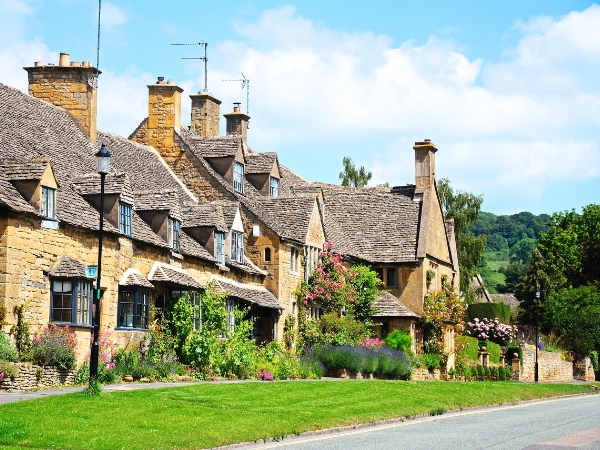
The allure of the British countryside is difficult to overstate. While London offers a world-class metropolitan experience, the true soul of the United Kingdom is found along the winding lanes of the Cotswolds, the rugged coastal paths of Cornwall, and the dramatic, mist-shrouded peaks of the Scottish Highlands. Truly, the most authentic way to experience these landscapes is by taking the wheel.
Driving in the UK is an exercise in adaptability. For many tourists, the most immediate change is driving on the left-hand side of the road. While this may seem daunting, the infrastructure is designed to guide you intuitively. Most rental cars will have the steering wheel on the right side of the vehicle, which naturally places the driver toward the centre of the road, helping to maintain your orientation. This guide is designed to transform your initial worries into the confidence needed for an unforgettable British road trip.
The first and perhaps most vital piece of advice for any tourist is to specifically request an automatic transmission when booking your rental car. In the United Kingdom, manual vehicles remain the standard for the local population. Unless you are highly proficient at shifting gears with your left hand while simultaneously navigating unfamiliar territory, the added cognitive load is rarely worth the slight cost saving.
An automatic car allows you to keep both hands on the wheel during complex manoeuvres and ensures your full attention remains on the road ahead rather than the floor of the car. If you do choose a manual vehicle, remember that the pedal layout remains the same, but the gear stick will be to your left.
You must develop a habit of always looking right. This is particularly important at T-junctions, roundabouts, or when pulling out of a car park. Since the traffic flows on the left-hand side of the road, merging and overtaking happen on the right-hand side. If you have spent decades looking left for oncoming traffic, your instincts will be working against you.
When you approach a junction, make a conscious effort to check the right-hand side first, then the left, and then right again. This simple mental habit is the most effective way to prevent accidents during your first few days of driving in the UK, especially when your brain is tired or you are navigating a complex urban environment.
Mastering the roundabout is a huge hurdle for many visitors. These circular junctions are ubiquitous in Britain and are designed to keep traffic flowing without the need for stoplights. The golden rule is to always give way to traffic approaching from your right. When entering, you must look to your right and wait for a safe gap in the flow.
Once you are in the circle, you have the right of way over those waiting to enter. Proper signalling is also crucial. If you are taking the first exit, signal left on approach. If taking a right-hand exit, signal right on approach and then switch to a left signal once you have passed the exit before the one you want.
Watch out for the yellow box junctions. These are areas marked with criss-cross yellow lines painted on the tarmac, typically found at busy intersections or near fire stations. You are legally prohibited from entering the box unless your exit is completely clear. Even if the traffic light is green, if there is a queue of cars on the other side of the box that would force you to stop inside it, you must wait behind the line.
In many British cities, automated cameras monitor these junctions 24 hours a day, and even a few seconds of being stationary within the box can result in a significant fine being sent to your rental agency. The only exception to this rule is if you are turning right and are only prevented from doing so by oncoming traffic or other right-turning vehicles.
It is vital to understand and strictly follow the speed limits, which are strictly monitored by hidden cameras and enforced by the police. In general, the National Speed Limit, which is indicated by a white circular sign with a single black diagonal stripe, usually applies. On one-lane roads, this is set at 60 mph. On dual carriageways and motorways where a central reservation separates the directions, the limit is 70 mph.
However, always be aware of your surroundings and look for signs. In built-up areas, the limit is typically 30 mph, though many residential zones and city centres have recently moved toward a 20 mph standard to increase pedestrian and cyclist safety. Violations may lead to heavy fines, which are usually processed by the rental agency and added to your bill, along with an administrative fee.

In places like the Lake District or the Scottish Highlands, you will frequently encounter single-track roads. These are lanes only wide enough for one vehicle to pass at a time. To manage this, the roads are dotted with passing places, often marked by white diamond-shaped signs.
If you see a vehicle approaching from the opposite direction, pull into the passing place if it is on your left, or wait opposite the one on your right so the other driver can pull in. It is customary to give a friendly wave of thanks to drivers who pull over for you, as courtesy is the bedrock of British rural driving.
If your travels take you near the capital, try to avoid driving in Central London entirely. The city operates a Congestion Charge Zone, which requires a daily payment of £18 for vehicles entering the heart of the city during peak hours. If you pay it late, the price will go up to £21. This is enforced by cameras which scan license plates to check for payment, which can be made online or via an app.
Furthermore, the Ultra Low Emission Zone (ULEZ) applies to most of Greater London, charging older or more polluting vehicles a daily fee. These zones are enforced by a vast network of cameras that scan number plates automatically. If you must drive in these areas, ensure you pay the fee online by midnight on the third day following your journey to avoid a heavy penalty.
There are various types of pedestrian crossings in the UK. Zebra crossings are marked by black and white stripes on the road, while Pelican and Puffin crossings are signal-controlled crossings operated by pedestrians. In the UK, pedestrians have the absolute right of way at these crossings once they have stepped onto the road.
If you see someone waiting at the kerb or beginning to cross, you should come to a complete stop and allow them to reach the other side safely before proceeding. Failing to stop at a pedestrian crossing is considered a serious driving offence and is highly frowned upon by local motorists.
In the UK, filling stations are almost exclusively self-service and pumps are clearly colour-coded to help you find the right fuel. Green is for unleaded petrol, and black is for diesel. While this might seem simple, the terminology may differ depending on the station and the region, so it is vital to check the labels.
Mixing up the fuel is an expensive mistake that can lead to permanent engine damage. If you do accidentally misfuel, do not turn the key or start the engine, as this will pull the wrong fuel into the system. Call your rental company or a breakdown service immediately to have the tank drained. Just take note that this will probably incur additional charges.
Parking in the United Kingdom requires a clear understanding of rules and a keen eye for signage. Always check the colour-coded markings. A double yellow line means no parking at any time, while a single yellow line usually means parking is restricted during certain hours of the day. Double red lines mean strictly no stopping, whether to park, load, or unload passengers.
Most town centres operate on a Pay and Display basis. You will find a kiosk or machine nearby where you must pay for your allotted time and place the printed ticket clearly on your dashboard. Increasingly, these machines are becoming cashless, requiring payment via a bank card or touch-to-pay systems. There are also areas where a resident permit is needed, usually identified by blue signage.

The prospect of driving in the UK may feel like a significant undertaking, but the rewards far outweigh the initial learning curve. Once you move past the initial adjustment of staying on the left side of the road, you will find that British roads are generally well-maintained, well-signposted, and populated by drivers who value order and patience.
Having your own vehicle allows you to escape the crowded tourist hubs and find the quiet, untouched corners of the British Isles that make this part of the world so special. Whether it is the salt-air cliffs of the Atlantic highway or the rolling green hills of the Yorkshire Dales, the best of Britain is waiting just over the horizon.
Do not let the challenging conditions deter you from the trip of a lifetime. The freedom to explore at your own pace, to stop at a centuries-old pub for lunch, or to photograph a castle at sunset is worth every moment. Enjoy the autonomy that only a road trip can provide. Book a car on Final Rentals today and plan your journey to the heart of the United Kingdom.